The Spirit of Galungan and Kuningan
Galungan and Kuningan celebrate the ultimate triumph of good (Dharma) over evil (Adharma). Because these holy days follow the 210-day Balinese Pawukon calendar rather than the standard 365-day year, their dates shift annually, occasionally occurring twice in a single Gregorian year. At its heart, this ten-day festival is also a window to connect with the ancestors.
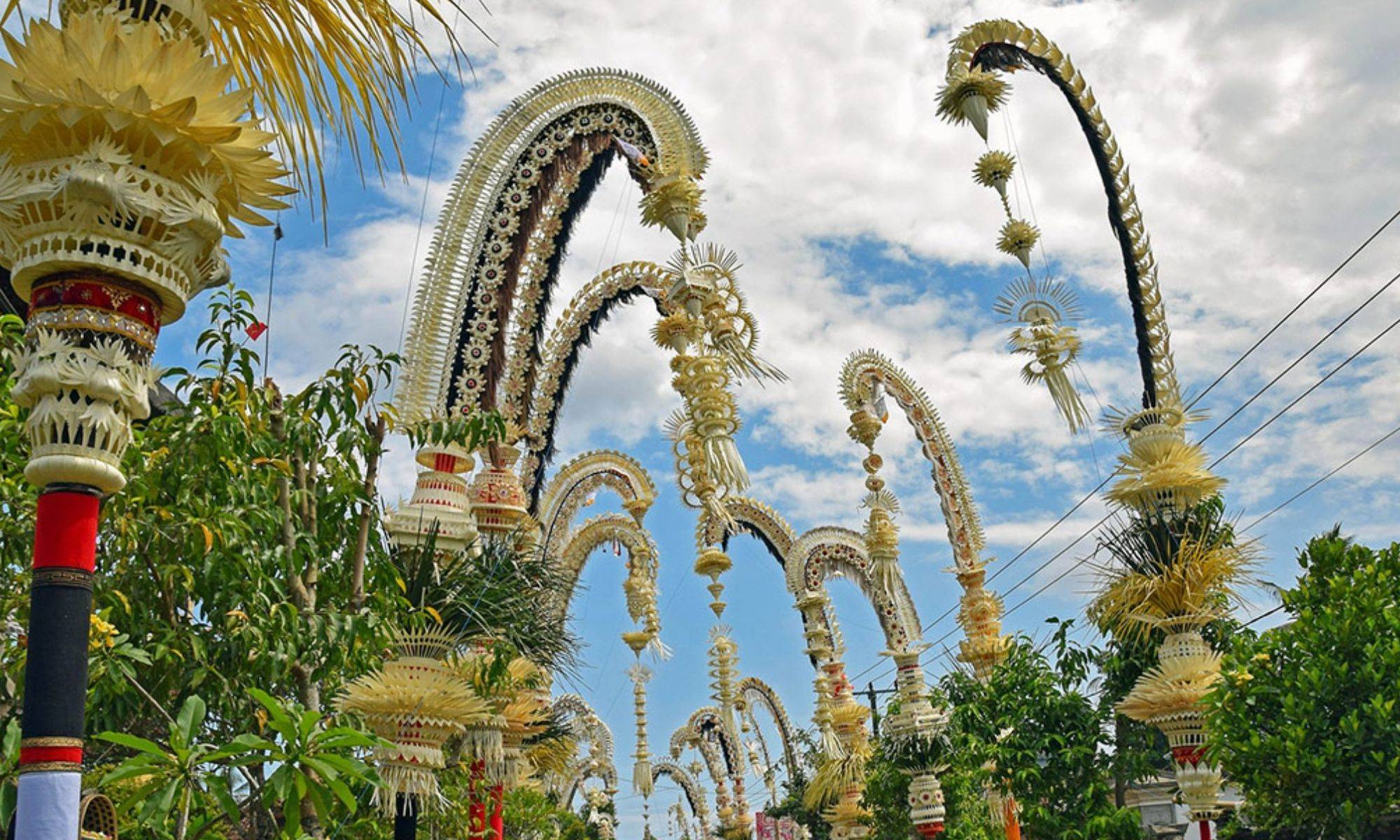
The Penjor
The most striking visual element of the holiday is the penjor—a towering, gracefully curved bamboo pole erected outside the entrance of every home. Functioning much like a Christmas tree in Western traditions, each household beautifully decorates its own pole. The penjor serves as a vibrant symbol of gratitude and prosperity, its curved tip mirroring the sacred peaks of Mount Agung and its decorations representing the bounty of the earth.
Festival Traditions: A Balinese Christmas
For anyone unfamiliar with Balinese culture, the atmosphere during Galungan and Kuningan feels remarkably like Christmas. The island comes alive with a shared spirit of family, devotion, and celebration through several key traditions:
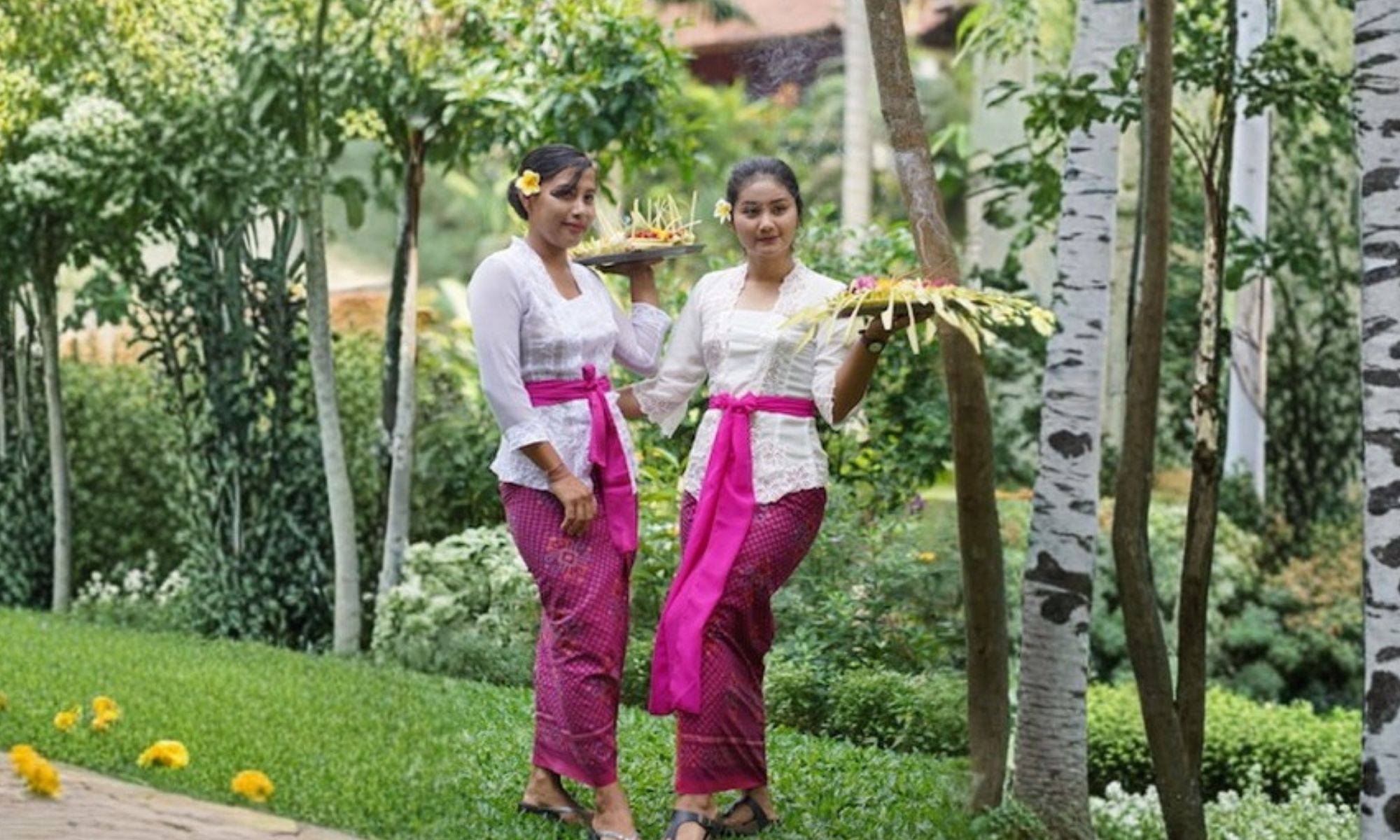
- Temple Decorations & Prayers: The family temple is decorated for the Galungan & Kuningan celebrations, similar to some western house holders who may decorate their homes during Xmas. Families wake early in the morning to pray at their village and family temples, fully dressed in elegant, vibrant traditional Balinese attire.
- Family Feasts: Relatives travel from all over the island to gather, reconnect, and share abundant feasts of traditional festive foods.
- Sacred Offerings: Households prepare intricate, hand-woven offerings to place at family shrines, welcoming and honouring the Divine and ancestors.
- Barong Parades: Children take to the streets in joyful processions to parade the Barong. This sacred, lion-like mythical creature reigns as the king of spirits, a fierce protector of villages, and the ultimate leader of good.
Kuningan marks the conclusion of the 10-day Galungan festival, serving as a sacred farewell ceremony and a day of deep spiritual introspection. Celebrated 10 days after Galungan, it is the day Balinese Hindus believe their ancestral spirits depart earth and return to the heavenly realm.